A garage door can look simple from the driveway, however anybody who has actually functioned around one understands better. It is one of the heaviest relocating systems in the majority of buildings, and the springtimes do the hard work that makes a 150 to 300 extra pound door feel convenient. When those springtimes start to stop working, the indication typically show up before the break. The trouble is that lots of property owners and even some property managers miss those very early hints, or they placed them off since the door still opens up "well enough."
That delay can obtain expensive quickly. I have seen a door limp along for weeks with a weakening springtime, just to get an opener, flex a track, and leave a vehicle trapped inside the garage on a Monday morning. I have actually also seen commercial doors boil down erratically due to the fact that one springtime shed stress, which put anxiety on rollers, hinges, and the driver. In both household garage door repair and industrial garage door repair, springtime issues rarely remain separated for long.
Understanding what the springtimes are informing you matters. Garage door spring replacement is not simply another upkeep item. It is a safety and security problem, a reliability issue, and in many cases, a way to stay clear of a much larger repair work bill.
Why springtimes matter more than most individuals realize
The garage door opener does not in fact raise the complete weight of the door by itself. The opener overviews and controls motion. The springtimes provide the counterbalance. When the spring system is functioning properly, the door should feel surprisingly light when disconnected from the opener. When the springtimes are worn, out of balance, or broken, the opener is suddenly asked to do a work it was never ever suggested to handle alone.
There are two springtime systems most people run into. Torsion springs sit above the door opening up on a shaft and store energy by twisting. Expansion springs run along the straight tracks and stretch as the door steps. Torsion systems are a lot more usual on more recent installs because they tend to operate even more smoothly and offer better control. Expansion systems still exist, especially on older doors and spending plan setups.
Both kinds wear out. Springs are ranked in cycles, and one cycle indicates the door goes up and returns down. A standard springtime may last around 10,000 cycles, though that number can differ based on top quality, setting, use, and door weight. In a home that opens up the garage 4 to 6 times a day, a spring can wear much sooner than individuals anticipate. In a busy business setting, the timeline can reduce dramatically.
The earliest signs are frequently subtle
Most spring failings do not begin with a dramatic bang, though that can occur when a spring ultimately snaps. Regularly, the door begins behaving in different ways. The modifications are little in the beginning. The door might appear somewhat larger. It might wait a minute prior to moving. You may hear a new audio and dismiss it due to the fact that the door still operates.
Those are the moments to pay attention.
An effectively well balanced garage door need to move with a regulated, practically easy feeling. When that really feel modifications, the springtime system deserves a closer look. In numerous garage door repair calls, the customer initially saw something was "a little off" 2 or three weeks previously. That information matters since it generally suggests the springtime was deteriorating, not simply randomly falling short out of nowhere.
Five warning signs you should never ignore
- The door feels hefty when you lift it manually, specifically if it utilized to relocate easily. The door opens a couple of inches and stops, or reverses unexpectedly. You listen to loud creaking, standing out, or a sharp bang from the garage. The door looks uneven, jerky, or irregular as it moves. There is a visible void in a torsion spring, or stretched, tired-looking expansion springs.
That short list covers one of the most usual red flags, but every one is worthy of context.
When the door suddenly really feels as well heavy
This is among the clearest indications that a springtime is no longer lugging its share of the load. If you pull the emergency release and attempt to lift the door by hand, it needs to not fight you. It needs to stay near waistline elevation if the balance is close to remedy. If it bangs down or takes genuine initiative to increase, stop there. That is not simply an annoyance. It implies the counterbalance system is compromised.
People frequently assume the garage door opener is stopping working when the actual issue is the spring. The opener may strain, hum noisally, or move the door gradually, yet that can be a signs and symptom, not the reason. Changing the opener first is an usual misdiagnosis. I have seen perfectly great garage door opener devices worn out because they were required to drag a dead-weight door for as well long.
Loud noises are not normal wear and tear
Garage doors are never quiet, but there is a distinction between routine operating noise and a noise that tells you something mechanical has changed. A sharp bang from the garage can be the noise of a torsion spring splitting. Many individuals explain it as seeming like a firecracker or a board snapping. If that occurs, do not keep trying the door.
Creaking and popping can also indicate trouble prior to a break happens. Those sounds may come from springs under tension, equipment moving due to the fact that tension is uneven, or bearings and braces reacting to a tons they were not seeing previously. Noise alone does not confirm that spring replacement is called for, yet sound combined with heavy motion or discrepancy is a strong indicator.
In coastal or moist environments, corrosion includes an additional layer. Rust does more than make springs look old. It enhances friction between coils and deteriorates the steel gradually. A rusty spring usually seems rough before it fails.
A jagged or bouncy door is a serious red flag
A garage door need to take a trip in a relatively smooth line. If one side increases faster than the various other, if the lower edge looks angled, or if the door shudders as it moves, the springtime system may be erratically tensioned or partially stopped working. Occasionally a cord issue is involved as well, however springs are usually at the root of the problem.
This is where damage can spread rapidly. Uneven motion places stress on the right track, rollers, joints, and panels. On a shielded steel door, that can indicate panel splits or distortion. On a timber door, it can mean bending and hardware pull-out. On commercial sectional doors, the load imbalance can put on via elements fast, specifically under constant use.
If a door is visibly misaligned, do not force it. That is how cords embark on drums, rollers pop cost-free, and doors get jammed midway open.
The opener starts acting strange
Modern openers have safety attributes that find resistance. When springs are failing, the opener might translate the additional weight or drag as an obstruction. The outcome can resemble an electric problem. The door begins down, then reverses. It obtains partway up and quits. The electric motor sounds strained. The rail might shiver more than usual.
Homeowners in some cases begin readjusting opener force settings to "address" the issue. That is usually the incorrect step. Boosting pressure to make up for a spring concern can produce a security danger and shorten the life of the opener. If the door equilibrium is wrong, the springtime problem needs to be resolved first.
This is one factor excellent technicians check the door by hand prior to condemning the electric motor. In both garage door repair and garage door installment work, balance comes first. The opener is only as reputable as the door system it is attached to.
Visible springtime damages suffices reason to call
You do not require a dramatic failing to validate solution. If you can see a tidy space in a torsion springtime, that spring is broken. If extension springs appear stretched out, elongated, or no more in proportion, they are likely put on beyond risk-free usage. If there is heavy rust, fraying cable televisions nearby, or loose placing equipment around the spring assembly, the system needs professional inspection.
One information many individuals miss is that springtimes ought to normally be changed as a set on a two-spring system. If one breaks, the other has typically undergone a similar variety of cycles and is not far behind. Replacing only one may look less costly in the moment, however it usually causes an additional solution call soon after, plus a door that is more challenging to balance properly.
Why placing it off gets expensive
A used springtime can harm greater than itself. The opener is the very first element that has a tendency to experience because it begins doing too much training. After that you might see frayed cables, bent shafts, worn bearings, broken joints, misaligned tracks, or damaged rollers. If the door boils down hard, panel areas can split or buckle. Those repair services accumulate quickly.
The indirect expenses matter as well. A stuck garage door can thwart a day, delay distributions, leave supply revealed, or catch a car inside. In a commercial setup, a nonworking overhead door can interrupt staffing, safety and security, and gain access to at one time. For property owners, the trouble is generally coupled with a safety and security worry, particularly when the door is iced up in the open position.
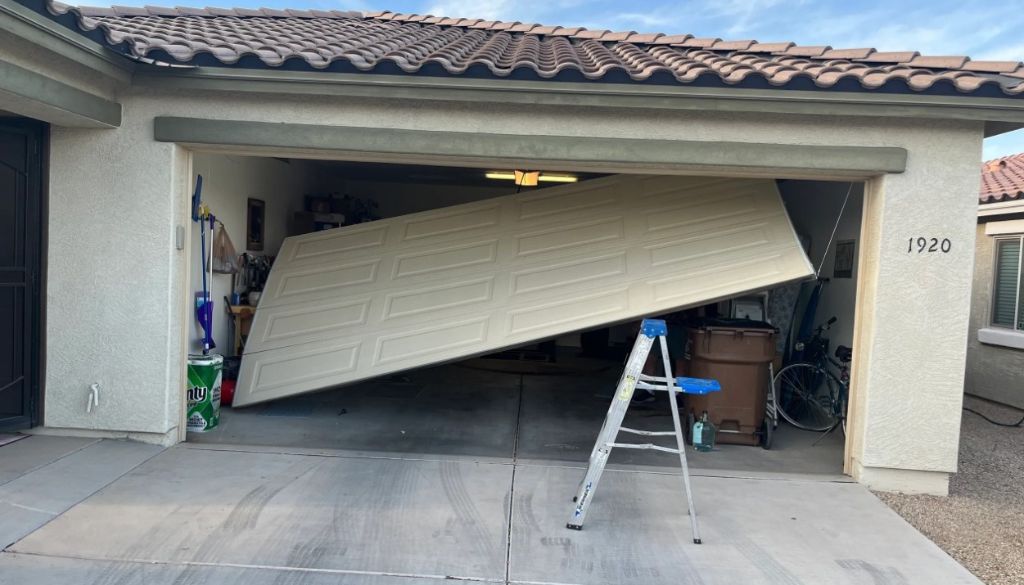
I keep in mind a service telephone call at a little automobile store where the proprietor had actually ignored a battling door for nearly a month. The spring had weakened sufficient that the driver maintained making up until the drive parts wore down. What began as a spring replacement developed into a larger industrial garage door repair including the driver, cables, and track change. The final cost was numerous times what an earlier repair work would have been.
Residential and business indication are not constantly identical
The core signs and symptoms coincide, however the context changes. In homes, the very early indications often show up as trouble. The door gets loud, the opener has a hard time, or the family notices the door is hard to lift during a power interruption. In industrial buildings, the trouble may provide as slower cycle times, irregular closure, or boosted wear on high-use hardware.
Commercial doors are often larger, larger, and used a lot more regularly. That suggests springs can get to end-of-life much faster than owners anticipate. A storehouse door that cycles loads of times a day does not age like a household door that opens up a few times each morning and evening. Because of that, set up assessment is not optional in many business atmospheres. It is basic threat management.
Why springtime substitute is not a laid-back do it yourself project
There are plenty of home maintenance tasks that compensate a cautious diy strategy. Garage door spring substitute is normally not one of them. Springs shop significant power. Releasing or using that tension incorrectly can trigger extreme injury. Torsion systems are specifically unforgiving if the incorrect tools are utilized or if winding bars slip. Extension systems lug their very own risks, particularly when safety and security cords are missing or damaged.
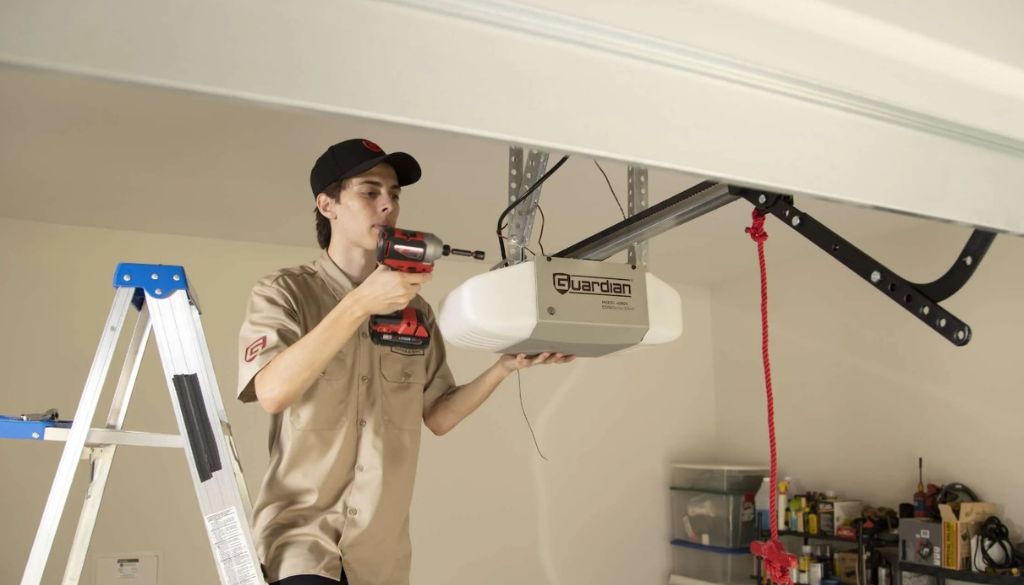
The net makes tough work look simple because video clips compress time and eliminate the consequences. What you do not see are the doors that were left out of balance, the drums that were mis-set, or the brackets that were loosened up at the incorrect moment. A spring task is not almost swapping parts. It is about matching the spring to the door weight, establishing correct tension, inspecting professional garage door repair services cord condition, validating balance, and verifying that the opener settings are still appropriate.
That work takes judgment, not simply instructions.
What a proper solution check out should include
A real spring replacement service must surpass eliminating the busted component and mounting a new one. At minimum, the specialist needs to review the whole training system due to the fact that springtimes do not run in isolation.
- Confirm the proper spring dimension and cycle score for the door's weight and usage Inspect cable televisions, drums, bearings, rollers, joints, and facility assistance hardware Balance the door by hand and examination opener operation after stress is set Lubricate suitable relocating elements and note wear that may require future attention Explain whether both springtimes need to be changed and why
That sort of go to prevents callbacks and protects the remainder of the system. It also gives the homeowner a clearer picture of what condition the door is in fact in.
The ideal spring is not just the springtime that fits
This is one location where experience matters. A spring can look close sufficient in size and still be incorrect for the door. If the wire size, inside size, size, or cycle score are not matched correctly, the door may technically open up, however it will certainly not balance correctly. That can result in brief opener life, rough travel, and premature wear.
The very same concern comes up after a garage door setup. If the door has actually been updated from a lighter non-insulated design to a much heavier insulated steel door, the original springs may no longer be appropriate. The door may work for a while, but stress turns up at some point. Whenever there is a major hardware modification, spring selection should be assessed as component of the overall setup.
Maintenance can aid, however it will not stop aging
Lubrication, routine inspection, and periodic balance checks can extend the beneficial life of springs and help catch warning signs early. They can not make a tired springtime new again. Steel under repeated tons ultimately wears out. The objective of upkeep is not to stay clear of substitute for life. It is to obtain a complete, safe service life and decrease the chances of collateral damage.
For home owners, an easy practice assists. Every couple of months, enjoy the door open and close without disturbances. Pay attention to it. Take a look at whether it relocates degree. Notification whether the opener appears different. If there is a manual launch and you know exactly how to utilize it safely, examination the balance only when the door is totally closed and problems are managed. If anything feels wrong, stop and arrange service.
For industrial residential or commercial properties, log cycle counts ideally, or a minimum of track service intervals. Heavy-use doors take advantage of planned maintenance since wear patterns turn up long before a complete failure.
How to determine whether it is urgent
If the door is still relocating, people frequently ask whether they can wait a few days. In some cases the response is indeed, however the danger depends on the symptoms. A noticeably damaged springtime, a misaligned door, a door that will not remain open, or an opener that is clearly stressing need to be dealt with as immediate. A little additional noise on an or else smooth, balanced door might enable a punctual however not emergency situation consultation. The difficulty is that many individuals underestimate what they are seeing.
A great regulation is easy. If the door's weight, balance, or placement appears transformed, do not maintain biking it to see what occurs. That screening is what turns a springtime problem into a multi-part repair.
The profits on alerting signs
Garage door springtime replacement is among those fixings where timing matters. Early activity typically implies a cleaner solution, lower cost, and less disturbance. Waiting usually indicates more tension on the opener, even more endure hardware, and a higher opportunity of an unexpected failing at the most awful feasible moment.
The indicators are rarely mysterious. A hefty door, loud noises, irregular traveling, opener stress, and noticeable springtime damages are all telling you the exact same point: the door is no more securely balanced. Whether you are managing a family members home, a packing bay, a solution shop, or a storage space facility, those cautions should have punctual attention.
Good garage door repair is not almost getting the door relocating once more. It has to do with restoring safe operation, matching the appropriate parts to the system, and ensuring the following cycle is as managed as the last one ought to have been. When springs start speaking, it pays to pay attention early.