When an industrial expenses door falls short at an active facility, the issue hardly ever remains restricted to the opening itself. Forklifts still. Shipment routines slide. Indoor temperature levels turn. Security dangers climb. At a distribution center, vehicle service bay, municipal fleet garage, food handling plant, or retail getting dock, one disabled door can throw off a whole shift.
That is why commercial garage door repair needs to be approached in different ways from a basic service telephone call at a low-use building. High-traffic centers put hundreds of cycles on doors, operators, springs, rollers, and tracks. They subject equipment to influence, vibration, dirt, weather condition, and tough everyday usage. In these setups, repair work choices have actual operational consequences. A cheap repair that lasts three weeks is not an option. It is postponed downtime.
After years of seeing what stands up and what falls short under pressure, one pattern is consistent. The best results come from treating the door as a working system as opposed to a collection of separate components. Springs, cords, panels, tracks, seals, controls, and the garage door opener all impact each other. If one element is replaced without dealing with the resource of the pressure, the following failing is frequently currently on the calendar.
What makes high-traffic facilities different
A commercial door at an active loading area might open and shut loads of times per hour. In a climate-controlled stockroom, that means every cycle matters for power retention. In a service facility, every delay affects bay turn over. In a secure site, every min a door rests half-open becomes a liability.
Residential garage door repair is often concerning restoring comfort and home protection. Industrial garage door repair is usually concerning maintaining throughput. That distinction alters the repair work strategy.
A facility supervisor could call due to the fact that a door is jerking on the way up, turning around unexpectedly, or making a loud metallic breeze. Those are evident signs and symptoms, but the operating atmosphere typically informs the deeper story. Repetitive forklift contact can knock tracks out of plumb by a portion of an inch, which suffices to chew via rollers and overload the opener. Dirt from manufacturing can foul image eyes. Temperature level swings can tense lubes and expose worn bearings. Corrosion near wash-down locations can weaken lower brackets long prior to anyone notices noticeable damage.
In high-cycle structures, also little positioning errors come to be expensive because repetition amplifies every problem. A roller that drags slightly at 10 cycles each day might survive for months. At 100 cycles each day, that same drag can ruin joints, stress the shaft, and shorten motor life in a hurry.
The failings that appear most often
The components that stop working first are generally the parts absorbing activity, stress, and effect. Torsion springtimes are a frequent perpetrator, specifically on older doors sized for conventional use however installed in buildings with far larger demand. Garage door spring substitute is common in commercial settings because cycle life matters. A springtime ranked for a reduced cycle matter may look penalty on paper, yet in a shipping facility it can age out a lot faster than expected.
Cables and drums are following on the listing. If a cable begins to battle royal, the problem is usually dealt with like a one-part replacement. Often that works. Typically it does not. Tearing might have started because the door is lifting unevenly, the shaft is shifting laterally, or the bottom brace took an effect that altered the cable television path. Replacing the wire without fixing the geometry simply reboots the countdown.
Track damages is one more huge one. Most facility teams observe serious bends, however minor effect damage is simpler to miss out on. A track can remain standing and still be misaligned sufficient to cause roller wear, loud traveling, and opener pressure. On sectional steel doors, panel damages can additionally take a trip. A broken stile around a joint factor can move tons to neighboring sections until the trouble spreads.
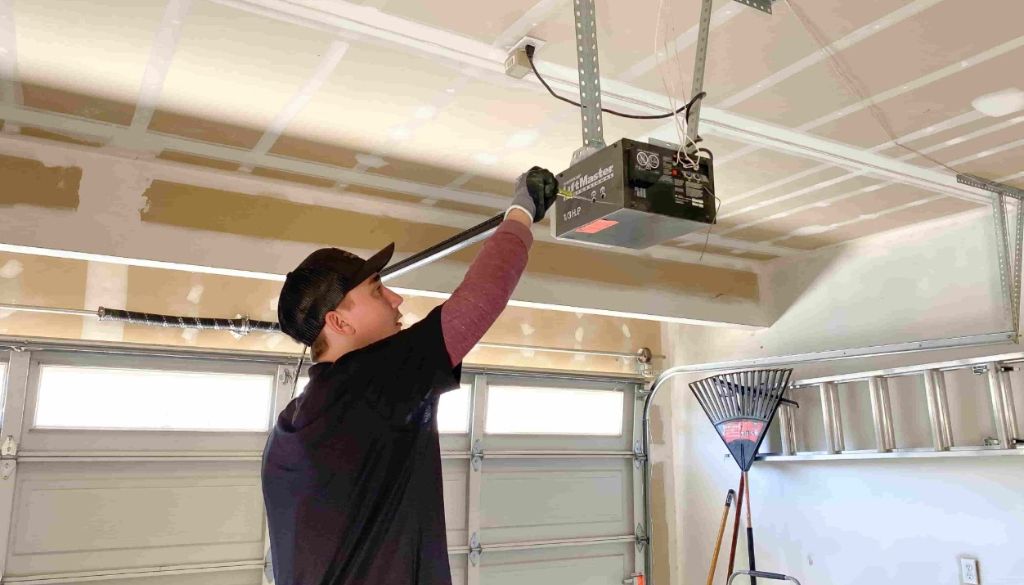
Then there is the operator itself. The garage door opener in an industrial facility does even more than lift and reduced the door. It integrates controls, limitation setups, entrapment defense, timer-to-close functions, and occasionally access monitoring. When drivers start to be reluctant, drift off limitations, or journey overload defense, professionals require to determine whether the motor is failing or compensating for a bad door. Changing an operator on a binding door is a pricey error that still leaves the website with an unstable opening.
Why fast solutions typically backfire
There is understandable stress to obtain doors moving once more quickly. At a hectic dock, every hour issues. Yet emergency repair services made without a broader assessment typically create repeat failures.
A good example is roller substitute on a door with harmed track brackets. The brand-new rollers may peaceful the door for a short time, which makes every person really feel much better for a week or two. Then the sound returns, adhered to by cable wear and an opener mistake. The root trouble was not the roller. It was lateral activity in the track assembly.
Another example is replacing a broken spring with the wrong cycle ranking since it is what the vehicle brings. The door functions again, yet in a high-traffic facility the spring may fail far earlier than administration anticipates. For low-use doors, conventional supply might be acceptable. For heavy-use openings, spring selection should show real cycle need, door weight, and stabilizing characteristics.
I when saw a fleet upkeep structure go through 3 operator solution contacts 2 months because the staff maintained resetting a stumbling device instead of addressing door drag. The opener was not faulty. The reduced track area had actually been struck by a lorry, creating just enough bind to exhaust the driver at mid-travel. When the track was fixed and the door rebalanced, the trouble disappeared.
That sort garage door repair of story prevails. High-traffic doors penalize guesswork.
Repair starts with a true operating diagnosis
The most efficient industrial garage door repair process begins with monitoring. Not just whether the door opens, however just how it opens up. Does it rise evenly? Does it hesitate at the very same point every cycle? Does the bottom seal hit the flooring regularly across the full size? Are the cable televisions carrying equal stress? Does the operator noise strained at start-up or near full open?
A solid specialist likewise takes note of hints that are not straight mechanical. Scuffed panel sides can show reoccuring contact. Dark residue on the track might show roller destruction. Gaps in boundary seals can recommend framework change or previous accident damages. Controls installed where lift traffic passes too very closely might discuss repetitive impact failures.
For high-traffic sites, a good diagnosis needs to answer three inquiries. What stopped working, what created it to fall short, and what neighboring parts have probably been reduced by the same issue. Without those answers, the repair service is incomplete.
Spring and counterbalance remedies that match genuine cycle demand
Garage door spring substitute deserves mindful idea in industrial settings because springtimes are wear items, but not all use products are equal. Springs have cycle scores, and those rankings should match the actual work of the opening.
If a door is used 15 times a day, a standard spring configuration might use acceptable service life. If the same opening sees 60 or 80 cycles a day, higher-cycle springs come to be a useful investment. The upfront price is greater, yet the mathematics typically favors durability as soon as service disturbances, labor, after-hours phone calls, and operational disturbance are considered.
This is specifically real at centers with stringent getting windows or cooled insides. A springtime failure at a cold-storage dock is not just a repair service billing. It can end up being an energy trouble, a product problem, and an organizing problem.
Spring work likewise has to make up equilibrium accuracy. A door that is technically operable yet poorly well balanced forces the operator to do function the counterbalance system should be doing. That reduces driver life and can develop irregular stopping actions. Sometimes, what resembles an opener issue is really an equilibrium problem hiding in ordinary sight.
Tracks, rollers, and joints, the wear factors that manage smooth travel
Smooth traveling is not cosmetic. It is a mechanical indicator. On a healthy door, rollers move cleanly, hinges articulate without excess play, and the track path remains regular from flooring to header. When among those conditions modifications, put on speeds up quickly.
At busy websites, rollers are often changed with the same product that just fell short, also when the facility setting suggests a much better alternative. Steel rollers might hold up well under some lots, however in messy or damp atmospheres they can develop sound or deterioration concerns. Sealed bearing rollers can offer much better service life in the best application. The secret is matching hardware to the website, not defaulting to whatever existed originally.
Hinges deserve even more attention than they get. Elongated joint openings, cracked fallen leaves, or deformed center joints can make a door stroll and shake under lots. The exact same goes with worn bearings at the end plates or center assistance. None of these components are attractive, but in high-cycle operation they establish whether the opening runs easily or gradually tears itself apart.
The ideal repair groups do not just change broken elements. They inspect the line of traveling after the repair and verify that the door is not drifting, racking, or binding under power.
Commercial drivers and controls need their own repair service strategy
A business garage door opener is not a homeowner-grade comfort tool. It becomes part of a gain access to system, a security system, and a procedures system. The driver has to interact with wall surface controls, essential buttons, draw cables, side sensors, image eyes, loops, timers, and in some cases building management systems. That indicates opener troubles are not constantly motor problems.
At high-traffic centers, control issues frequently come from ecological abuse. Picture eyes obtain knocked senseless of positioning. Wiring gets pulled loose throughout cleanup or devices motion. Timer settings are transformed throughout a shift and never ever restored. Limit switches over drift after duplicated heavy usage. Exterior radio controls can fall short from moisture invasion or age.
Repairing the operator side effectively indicates checking the full chain. A motor that hums but does stagnate might indicate a stopped working capacitor, a binding door, a brake concern, or a drive problem. A door that reverses near the flooring might suggest a closing force setting that is also delicate, however it may additionally be responding to floor changes, bad edge discovery, or seal compression that changed over time.
This is one location where business garage door repair varies greatly from household garage door repair. In a home, troubleshooting is generally uncomplicated since the configuration is easy. In a facility, there may be multiple control inputs and safety and security gadgets layered with each other. A hurried diagnosis can squander hours.
When fixing is no more the wise choice
Not every door need to be fixed forever. There is a factor where covering an aging opening sets you back more than preparing a replacement. That point gets here sooner in high-traffic centers because the expense of downtime is a lot higher.
Garage door installment comes to be the much better option when the door has persistent panel damage, obsolete operator components, repeated track distortion, or extreme corrosion in architectural accessory factors. It additionally makes good sense when the structure use has actually transformed. A storage facility that currently manages even more everyday traffic than it did five years back might need a higher-cycle system, much better insulation, faster driver action, or improved influence resistance.
Replacement does not always imply an overall redesign. Often it suggests choosing a door and hardware plan that much better matches the actual usage case. A full-view door might look exceptional in a showroom solution lane, yet it may not be ideal for a freight-heavy opening. A rolling steel door may boost security and longevity in one area, while a sectional protected door may be better for environment control in another.
The right garage door installment decision must consider web traffic volume, opening size, environmental direct exposure, safety demands, insulation goals, and serviceability. A a little higher first spend can decrease emergency calls substantially over the following several years.
Downtime preparation matters as much as the repair work itself
At high-traffic homes, the timing of job matters almost as long as the job. Some centers can take in a repair work throughout lunch or second shift. Others require presented solution due to the fact that one opening can not be secured of commission without rerouting operations.
That is why the strongest company ask operational questions prior to they begin. Which doors are mission-critical? Is there a back-up path for obtaining? Can the site isolate one bay at a time? Does the driver need lockout control with internal safety and security staff? These details influence exactly how a fixing must be scheduled and executed.
For facilities with continuous task, temporary stablizing can often get a small planning window, yet just if it is secure and plainly communicated. A door could be protected in an open position for a few hours to protect web traffic circulation, or a troubleshooting circuit might be isolated while the opening is run under monitored handbook protocol. These are not long-lasting answers, however they can help a service avoid a period while permanent repair services are organized.
Preventive service is the most inexpensive emergency situation repair you never have to make
Most pricey failures leave cautioning signs initially. The obstacle is that active facilities normalize noise, resonance, and slow-moving wear and tear till something ultimately damages. Preventive solution adjustments that pattern by turning response into inspection.
A practical maintenance program for high-traffic doors normally consists of the following:
Checking springtime balance, cord condition, roller wear, and track placement on a normal schedule connected to cycle volume Testing safety devices, limitation setups, and opener feedback under typical operating load Tightening hardware, oiling accepted points, and changing worn palatable parts prior to they harm nearby components Documenting repeat problems by opening, so chronic impact areas or operator faults come to be noticeable over time Reviewing whether the existing door arrangement still matches the facility's traffic and ecological demandsThat kind of program is not extravagant, but it works. In lots of structures, the initial preventive go to reveals years of postponed wear. As soon as the backlog is dealt with, service calls normally come to be extra foreseeable and far much less disruptive.
Special conditions that change repair service priorities
Not every facility places tension on doors similarly. Food and drink sites present wash-down exposure and stringent cleanliness problems. Car shops handle exhaust, grit, and frequent car activity. Distribution centers face repeated forklift communications and long open durations. Parking frameworks often have wind lots, moisture, and corrosion issues. Fire stations and emergency reaction structures have virtually no tolerance for sluggish cycle times or failed openings.
These problems influence repair selections. Corrosion-resistant parts might deserve the added cost near chemical exposure. Sturdy bottom seals may spend for themselves in dirty freight atmospheres. Faster drivers can enhance efficiency in some buildings, yet just if the door framework and safety and security package are fit to that speed.
One side case that gets ignored is mixed-use residential or commercial properties where a professional tries to use household habits to a commercial opening. The language appears familiar, however the context is not the same. A technology who mostly handles property garage door repair may be completely skilled with home systems, yet still miss out on the operational and safety complexity of a high-cycle business bay. That does not make the person inexperienced. It means the center requires somebody familiar with commercial demands.
How supervisors can inform whether a repair service referral is sound
A solid repair recommendation specifies. It describes what failed, why it fell short, and what happens if only component of the trouble is resolved. It likewise distinguishes between immediate security issues, near-term reliability dangers, and optional upgrades.
If a professional says a springtime broke and needs substitute, ask whether cycle rating must be boosted. If the opener is being criticized, ask whether the door was tested for smooth hands-on activity first. If cords are frayed, ask what triggered the wear pattern. If a panel is damaged, ask whether the tracks and jamb attachments were checked for effect transfer.
Good answers are normally clear and grounded in monitoring. Unclear answers tend to lead to duplicate service.
It also helps when provider record the problem of the opening with photos and keep in mind the cycle atmosphere. In high-traffic facilities, that record comes to be useful. It enables supervisors to see whether Door 3 constantly has the very same problem, whether driver resets are increasing, or whether one filling lane is accumulating a lot more influence damage than the rest.
The viewpoint pays off
Commercial garage door repair for high-traffic facilities is not nearly obtaining a door to move again. It is about bring back safe, repeatable performance under genuine operating stress. That calls for much better diagnosis, lion's shares choice, and much better judgment than a basic substitute repair.
When facilities align repair strategy with actual website traffic volume, the outcomes are very easy to see. Emergency situation calls decrease. Operators last longer. Door travel obtains quieter and smoother. Safety and security devices work as planned. Loading routines stabilize. Power loss drops. Team quit treating the opening like a daily gamble.
There is still an area for urgent reaction, of course. Springs break. Tracks get hit. Controls fall short at the most awful minute. Yet the centers that take care of these issues ideal are the ones that move swiftly in the moment and think very carefully after the door is running again.
In useful terms, that suggests picking industrial garage door repair partners who comprehend cycle life, counterbalance accuracy, impact damage, driver logic, and downtime planning. It indicates recognizing when garage door spring substitute must consist of an upgrade, when a garage door opener concern is truly a door concern, and when garage door setup is the smarter lasting step. It likewise indicates not confusing the requirements of a high-use industrial opening with the simpler demands of residential garage door repair.
Busy structures depend on trusted openings greater than the majority of people understand. When those openings are fixed with a full-system way of thinking, they quit being chronic headaches and return to what they ought to be, reliable facilities that allows the rest of the procedure move.